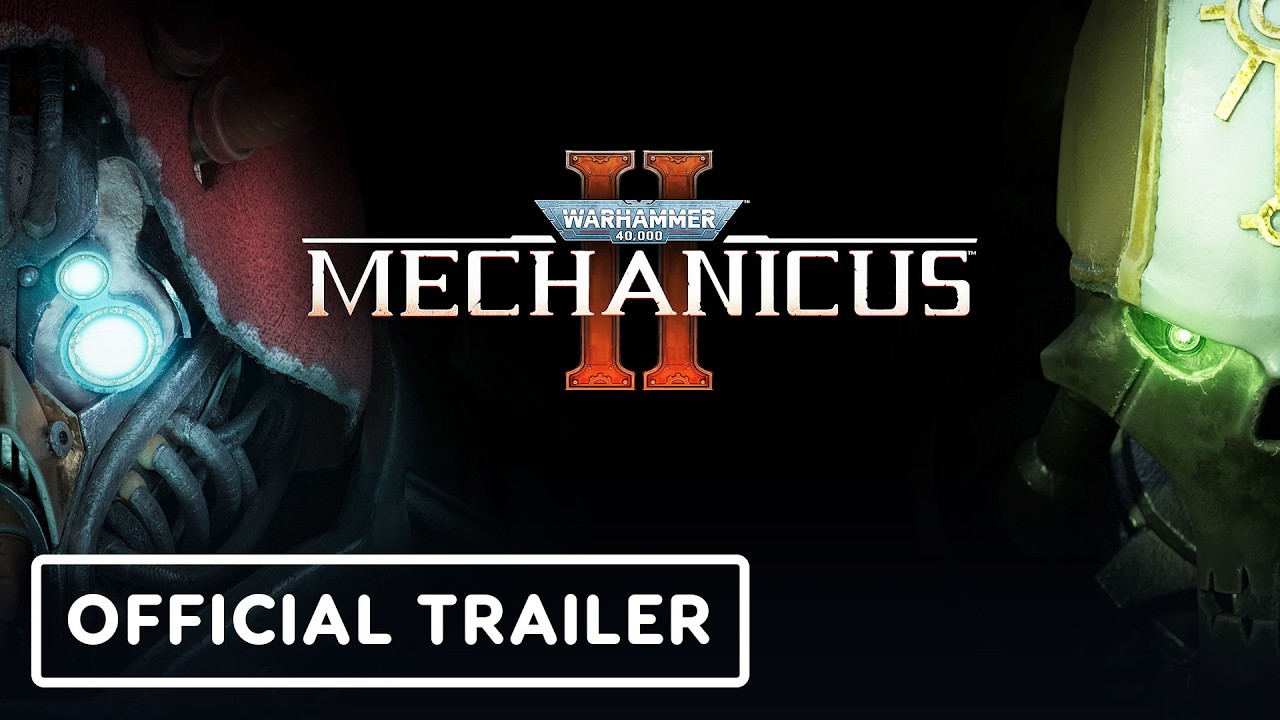
Warhammer 40,000 Mechanicus 2 – Official Videx & Obasis Leader Deep Dive Trailer

Take a look at the Videx & Obasis Leader Deep Dive Trailer for Warhammer 40,000 Mechanicus 2, a turn-based strategic action RPG developed by Bulwark Studios. Players can get the rundown on new leaders in the game with the Adeptus Mechanicus leader and one Necron leader to get familiar with their playstyles, abilities, and strategic roles in the game. Warhammer 40,000 Mechanicus 2 is launching on May 21 for PlayStation 5 (PS5), Xbox Series X|S, and PC (Steam and Epic Games Store).
#ign #gaming
Warhammer 40,000 Mechanicus 2 – Official Videx & Obasis Leader Deep Dive Trailer
The release of the Official Videx & Obasis Leader Deep Dive trailer for Warhammer 40,000: Mechanicus 2 marks a pivotal moment for strategy enthusiasts and narrative aficionados alike. This new glimpse into the game’s mechanized frontier expands on the tactical depth and rich lore that fans have come to expect from the Adeptus Mechanicus battlefield. In this exploration, the trailer foregrounds Videx and Obasis as central command figures, spotlighting their leadership styles, battlefield roles, and the strategic synergies they enable within a diverse priesthood of tech-priests, savant engineers, and battle-hardened initiates.
Structure and pacing are at the heart of the trailer’s design. A measured sequence traverses Videx’s command philosophy, from meticulous resource management to decisive, high-impact maneuvers that tilt engagements in real time. The portrayal emphasizes precision execution: harnessing arcane cogitators, reconfiguring servo-skulls, and coordinating with the broader Mechanicus roster to maximize alloyed firepower and bifurcated support lines. Obasis, by contrast, is depicted through a lens of relentless adaptation. The trailer illustrates his capacity to pivot during skirmishes, weathering shocks from enemy incursions and extracting value from compromised battlegroups via rapid redeployment and augmented focusing of fire.
Visual storytelling reinforces the game’s signature aesthetic: brass filigree, hydraulics, and a litany of grim-dark iconography. Mechanical legacies are not merely decorative; they’re functional, informing both unit behavior and the strategic options available to players. Videx’s arrays of diagnostic augurs and control matrices signal a leadership approach grounded in anticipatory planning: read the battlefield, anticipate resource flux, and allocate synthesisers and artillery with surgical precision. Obasis embodies improvisation within discipline, showing how tactical flexibility can compensate for pressure in the crucible of melee combat and long-range suppression.
From a gameplay perspective, the trailer highlights key mechanics that players can anticipate in Mechanicus 2. First, the integration of leadership abilities that influence unit cohesion, reconfiguration of battle lines, and activation of combined-arms sequences. Second, the emphasis on resource economy and tech-priest management—where every decision reverberates through supply lines, matriarchal data streams, and the availability of rare artifacts. Third, the dynamic feedback loop between ground operations and overarching strategy, where the choices made by Videx or Obasis alter the tempo of engagements, battlefield sustainment, and the pacing of reinforcements.
Narrative threads teased in the trailer suggest a continuation of the series’ tradition: a mythic struggle to safeguard sacred knowledges while pushing the boundaries of mechanized warfare. The Videx-Obasis dynamic is more than a dichotomy of styles; it’s a study in leadership under siege, where the synergy of calculated foresight and adaptive resilience can mean the difference between conquest and oblivion. For players, this translates into decision trees that reward thoughtful planning, unit synergy, and timely risk-taking.
Technical polish stands out in the trailer through its audiovisual fidelity and performance cues. Weapon systems, servo-motor animations, and HUD indicators are presented with clarity, enabling players to translate cinematic moments into actionable in-game tactics. The lighting, audio design, and environmental details convey the weight of command—every choice is tethered to the gravity of serving under the Adeptus Mechanicus and the pursuit of vast, hidden technologies.
In sum, the Videx & Obasis Leader Deep Dive trailer is more than a promotional piece; it’s a briefing on the strategic soul of Warhammer 40,000: Mechanicus 2. It invites players to study leadership in a setting where knowledge is power, where alliances between human and machine are the backbone of victory, and where the battlefield is a canvas for calculated risk, precise execution, and reverence for the machine’s litany. As the game advances toward release, anticipation builds around how Videx and Obasis will translate their featured competencies into enduring in-game impact, shaping campaigns, skirmishes, and the broader mechanized odyssey that players are poised to undertake.
24/7 Video Game
All the best video games, all the time. Watch no commentary gaming videos live and on demand. By Adrian M ThePRO the Game Professional.
Join The Pro Gamers Community
• You are a pro gamer! • Share your content! • Get discovered!
Join The Pro Gamers Community on social media or login to 24/7 Video Game and submit your posts right to this website.
Up Game Shop
New & used video games, consoles, handhelds, retro, and gaming merchandise. Up Game Shop has the latest and greatest video game deals on the internet.














































































 In the crowded landscape of simulation and strategy titles, a fresh voice rises with the announcement of Rideshare Stimulator. This eagerly anticipated project promises to blend the everyday rhythms of urban transit with the strategic depth of a vibrant management sim, inviting players to build, optimize, and innovate within a living city ecosystem. From the moment the trailer opens, viewers are drawn into a world where every ride is a data point, every route a potential storyline, and every passenger interaction a chance to refine efficiency and experience. The visuals balance a polished, realistic aesthetic with a stylized energy that hints at emergent gameplay, where small decisions can cascade into meaningful outcomes for both drivers and the city they serve. Key elements highlighted in the trailer include: - A dynamic cityscape that evolves with player decisions, offering new districts, events, and challenges. - A robust fleet management system that blends vehicle economics, routing accuracy, and driver satisfaction. - A mission-based progression path that nudges players toward responsible governance, sustainable practices, and community engagement. - A user interface designed for clarity, enabling quick decision-making during high-demand periods without sacrificing deeper layers of strategy. The narrative thread of Rideshare Stimulator centers on balancing growth with quality of service. Players are tasked with expanding a rideshare network while maintaining safety standards, worker morale, and environmental considerations. The trailer emphasizes collaboration with city planners, local businesses, and riders, underscoring the game’s emphasis on social impact and urban vitality. Gameplay promises to reward strategic foresight as traffic patterns, peak hours, weather conditions, and city events interact in complex ways. Resource management, optimization challenges, and data-driven decision-making will form the backbone of the experience, inviting players to experiment with different models of operation—fleet sizing, pricing strategies, incentive programs, and route optimization—while staying aligned with ethical and practical realities of modern urban mobility. Visually, the trailer conveys a crisp, contemporary aesthetic with a focus on readability and tactile feedback. Shimmering dashboards, intuitive drag-and-drop route planning, and cinematic cutscenes hint at a polished production that respects both the hobbyist and the professional strategist. The soundtrack blends energetic tempo with moments of reflective cadence, mirroring the dual nature of daily rides: brisk momentum tempered by careful consideration. With an emphasis on replayability, Rideshare Stimulator appears to offer multiple scenarios and difficulty tiers designed to challenge experienced players and welcome newcomers. The promise of evolving city layouts, seasonal events, and randomized challenges suggests a game built for long-term engagement and ongoing discovery. As the reveal unfolds, anticipation builds for deeper dives into mechanics, customization options, and the breadth of strategic avenues available to players. The development team signals a commitment to accessibility and depth, aiming to deliver a title that speaks to fans of simulation, city-building, and management genres alike. In the coming months, fans can expect detailed breakdowns of features, creator-led previews, and hands-on demonstrations that will illuminate how Rideshare Stimulator translates real-world urban dynamics into a compelling, interactive sandbox. The announce trailer serves as a confident invitation to join a journey where the art of transportation meets the science of optimization—and where every ride counts toward a smarter, more responsive city future.