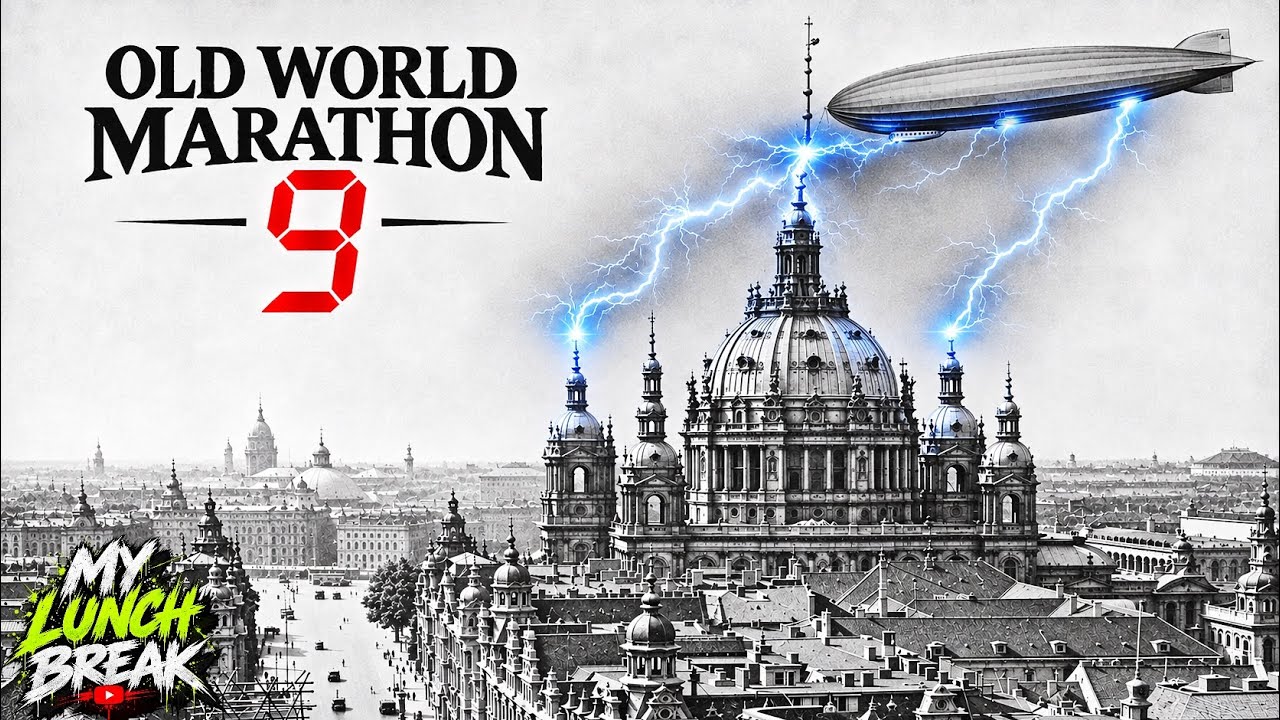
Old World Marathon #9 opens a door onto one of history’s most enduring kinds of speculation: the sense that ancient ruins may hold stories that familiar explanations have left unfinished. The feature builds its appeal around monumental architecture, puzzling construction techniques, vanished structures, and the shadowy legend of the six-fingered Nephilim. It’s a compelling mix of archaeological mystery and alternate-history storytelling, inviting viewers to follow the questions while keeping the distinction between evidence and conjecture in view. For context on how historians assess the past, Encyclopaedia Britannica’s overview of archaeology offers a useful starting point, while Smithsonian Magazine’s history coverage explores the discoveries that continue to reshape historical understanding.
When Ancient Architecture Becomes a Mystery
The marathon’s central hook is visual and immediate: immense stonework can make modern viewers wonder how builders moved, shaped, and assembled such massive materials. That wonder is a powerful entry point into the history of engineering, where patient labor, ingenious tools, skilled planning, and generations of accumulated knowledge often explain achievements that can look impossible at first glance. Monumental construction deserves both awe and careful investigation; a dramatic question is not, by itself, proof of a hidden civilization. Readers curious about real archaeological methods can explore National Geographic’s history features and Britannica’s guide to architecture.
The Nephilim and the Pull of the Unknown
Among the marathon’s more mysterious threads is the reference to the six-fingered Nephilim, a figure that draws on ancient texts, folklore, and modern speculation. Such stories have an undeniable atmosphere: they suggest that traces of an unfamiliar past might be hiding in plain sight. But the distance between a striking legend and a verified historical claim matters. The feature is most engaging when its claims are treated as invitations to investigate rather than settled conclusions, with historical documents and photographs examined in context. For readers interested in how traditions and ancient writings are studied, Britannica’s entry on the Nephilim and the Metropolitan Museum of Art’s Heilbrunn Timeline of Art History provide avenues for further reading.
Photographs, Documents, and the Limits of a Clue
The promise of historical photographs and original documents gives Old World Marathon #9 the texture of an investigation. Images can reveal details overlooked in familiar accounts, while records can help establish when a structure was built, altered, or lost. Yet every clue needs provenance and context: a photograph may show what existed at a particular moment, but it cannot automatically explain who built it or why. That tension between discovery and interpretation is part of the appeal. Resources such as the Library of Congress collections and the U.S. National Archives research guides demonstrate how primary sources can be explored with care.
Following the Questions Without Losing the Evidence
At its heart, this marathon episode is powered by questions: who built the Old World’s grand structures, how were they made, and what happened to the worlds that produced them? Those questions can spark genuine curiosity, especially when they lead viewers toward architecture, archaeology, and the preservation of historic sites. The strongest approach is to enjoy the mystery while checking bold claims against credible research and recognizing when an idea remains speculative. That balance keeps the experience entertaining without confusing possibility with proof. For more on archaeological research and heritage protection, visit Archaeology magazine and UNESCO’s World Heritage Centre.
Old World Marathon #9 offers a sweeping tour through extraordinary buildings, disputed interpretations, and the human fascination with lost history. Its blend of visual evidence and big questions makes it an inviting watch for audiences drawn to mysteries, provided each theory is weighed thoughtfully. Whether viewers arrive as skeptics, history enthusiasts, or fans of alternative-history debates, the episode’s most lasting effect may be the urge to look more closely at the structures and stories that surround them. Further perspectives are available through History and World History Encyclopedia.