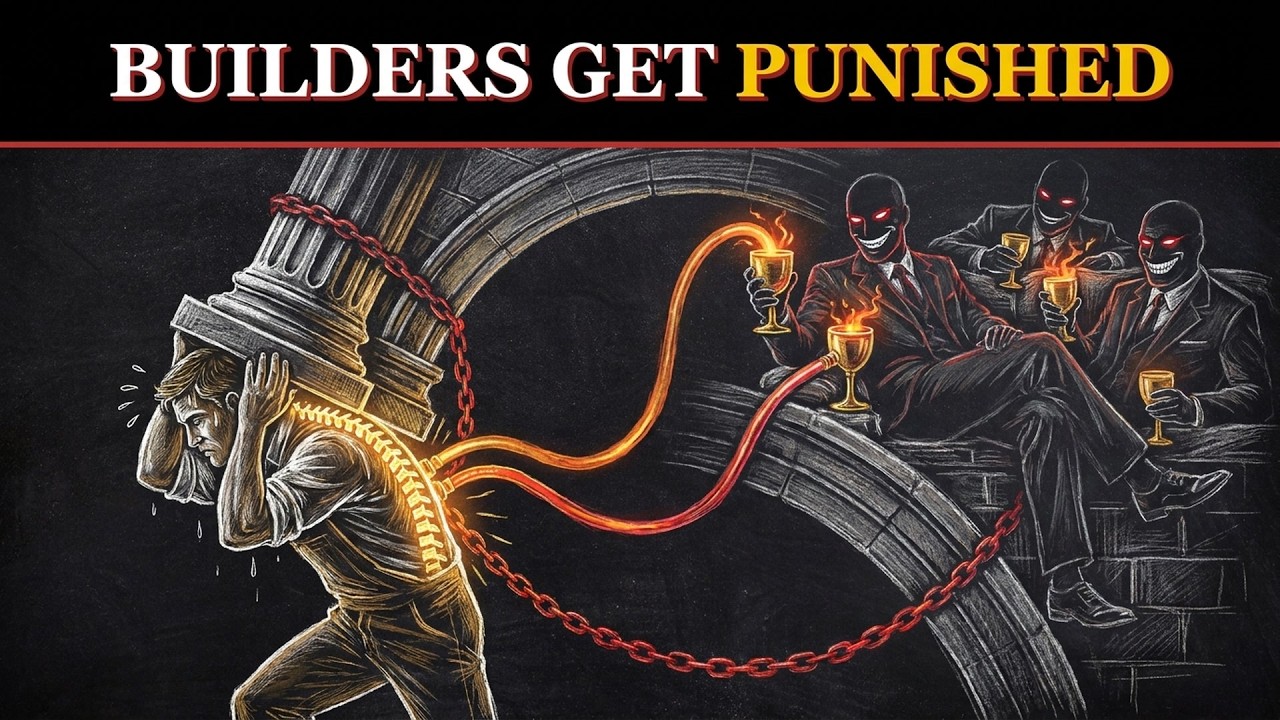
When the Builders Become the Problem
A society rarely announces its decline with a dramatic collapse. More often, the warning arrives as a quiet reversal: the people who keep institutions working are treated as obstacles, while those who profit from dysfunction learn to thrive. That tension runs through Niccolò Machiavelli’s political writing and Oswald Spengler’s civilizational theory, offering a bracing lens on why competence can become a liability. Machiavelli’s Discourses on Livy examines how republics lose their civic foundations, while Spengler’s work imagines civilizations hardening into exhausted, extractive systems.
Machiavelli’s Warning About Civic Rot
In the Discourses, Machiavelli returns to a difficult political pattern: institutions founded on shared purpose can become captured by private interests. Once public responsibility gives way to faction and self-protection, reformers may be hated not because they are wrong, but because their presence exposes how much has gone wrong. The Gracchi brothers, whose reforms shook the Roman Republic, make a vivid historical touchstone for that danger. Their story, discussed in accounts of Tiberius Gracchus and Gaius Gracchus, shows how attempts to address structural grievances can collide with entrenched power.
The Competency Tax Comes Due
In a failing organization, reliable people often inherit more work precisely because they are reliable. Their reward for solving problems is another problem; their competence becomes an informal subsidy for everyone who avoids responsibility. Research on performance punishment has explored how high performers can face backlash when their success threatens established expectations, while studies of moral rebels examine the social costs of refusing to go along. These dynamics are not universal laws, but they help explain why principled dissent can feel isolating. Research from Duke University and work by Stanford researchers offer useful starting points for understanding those pressures.
Parkinson’s Law and the Bureaucratic Machine
As institutions grow, they can begin to reward the maintenance of the institution more than the purpose it was built to serve. C. Northcote Parkinson’s famous law satirizes how administrative work can expand to occupy the time available, while Derek J. de Solla Price’s research traces the explosive growth of scientific systems and their machinery. Together, these ideas suggest a troubling possibility: a structure can keep enlarging even as its useful output stagnates. Parkinson’s satirical account of bureaucracy and Price’s history of scientific growth illuminate how process can become its own product.
Why the Unbribed Person Gets Under Everyone’s Skin
Corruption is not always a cash payment or a secret deal. Sometimes it is the smaller bargain of silence, lowered standards, and mutual permission to look away. A person who refuses that bargain can make the surrounding compromise visible, turning private discomfort into public friction. Social conformity and public-goods cooperation help explain why groups may punish people who disrupt comfortable arrangements, even when those people are acting for the common good. The classic experiments by Ernst Fehr and Simon Gächter examined cooperation and punishment, while research on moral rebels explores the personal cost of standing apart.
Spengler’s Extraction Engine
Spengler’s vision of civilizational decline is grand and controversial, but its central image remains potent: living cultures can harden into systems that consume the energy they once created. Ibn Khaldun, writing centuries earlier, described a related cycle in which ruling groups lose cohesion and vitality as dynasties age. In both accounts, extraction replaces creation when institutions depend increasingly on the productive minority while offering less in return. Readers can explore Spengler’s Decline of the West alongside Ibn Khaldun’s Muqaddimah to see how different traditions have grappled with the life cycle of power.
Withdrawal Is Not the Same as Surrender
The bleakest lesson of this argument is not that every institution is doomed, or that every leader is corrupt. It is that builders cannot repair a system indefinitely by sacrificing themselves to its failures. Strategic withdrawal can mean setting boundaries, protecting time and attention, and choosing work where effort still produces something real. That is less a retreat from civic responsibility than a refusal to confuse endless self-sacrifice with meaningful service. Machiavelli’s political writings and contemporary discussions of Stoicism offer contrasting tools for thinking about agency, obligation, and the limits of personal control.