A slogan built for the gaming conversation
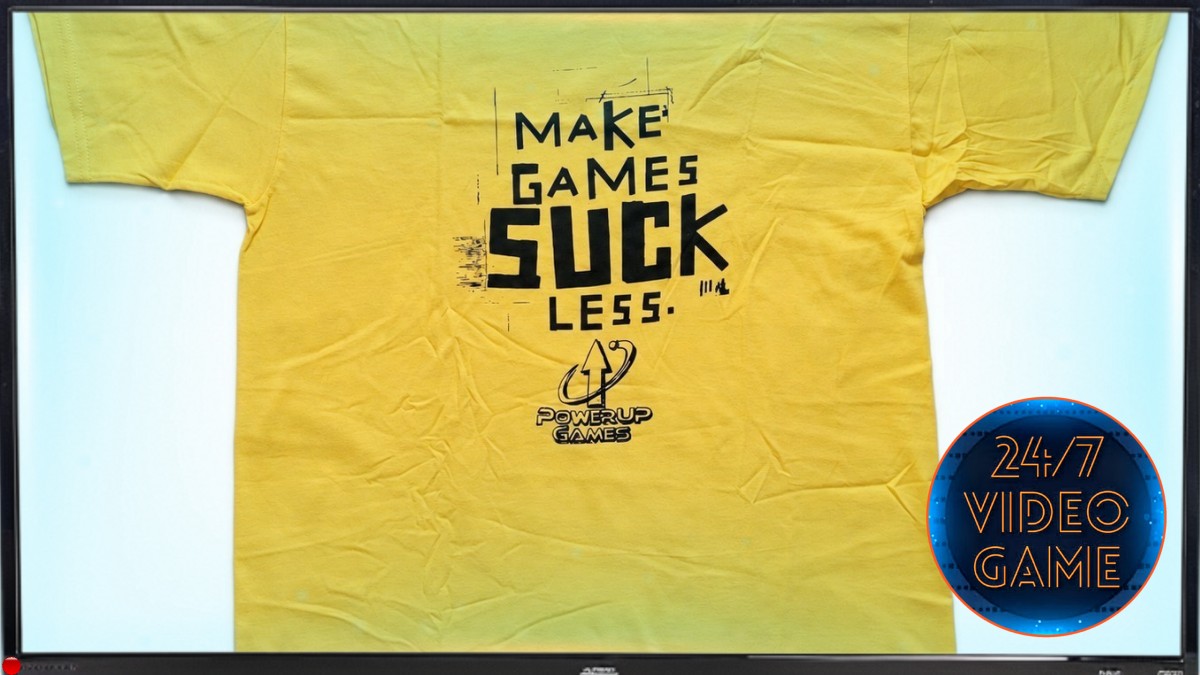
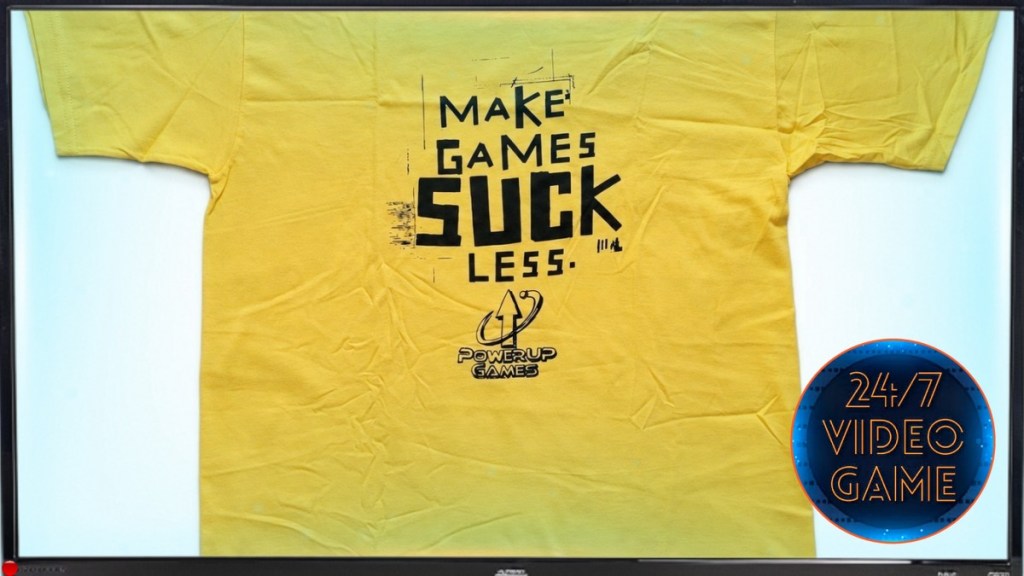
“Make Games Suck Less” is the kind of blunt, playful slogan that feels right at home in gaming culture: part joke, part challenge, and entirely confident in its point of view. Printed on a yellow PowerUp Games promo T-shirt, the phrase turns an everyday piece of apparel into a little time capsule of the 2000s, when gaming’s identity was expanding well beyond the living-room screen. The shirt’s appeal reaches beyond fashion, tapping into the ongoing conversation about what makes games memorable, as seen across IGN’s gaming coverage and the wider history documented by Wikipedia’s overview of video games.
Yellow cotton and unmistakable 2000s energy
The bright yellow color gives the design an easy, instantly recognizable presence, while its vintage 2000s framing calls up an era when game shops, magazines, forums, and fan-made graphics all helped shape the medium’s personality. This isn’t a quiet, minimalist nod to gaming; it wears its enthusiasm out in the open. That spirit fits a period when games were becoming a bigger part of mainstream entertainment, a shift reflected in Britannica’s history of video games and the enduring fan culture explored by Polygon.
PowerUp Games and the joy of a good provocation
The name PowerUp Games lends the shirt the feel of a promotional artifact, while its slogan carries the sort of mischievous optimism that gamers can appreciate: if a game disappoints, there’s always room to imagine how it could be better. That tension between affection and critique has long been part of gaming fandom, where lively debate about design, storytelling, and difficulty sits alongside genuine excitement for the next great release. Readers can trace those conversations through GameSpot’s reviews and features and the broader entertainment perspective at Rolling Stone’s culture section.
A wearable snapshot of gaming nostalgia
For collectors, longtime players, or anyone drawn to the visual language of early-2000s gaming, the shirt offers a compact piece of gaming nostalgia with a punchline that still reads clearly. Its appeal is less about a specific console or franchise and more about the shared culture around games—the jokes, arguments, and big hopes that keep players talking long after the screen goes dark. That broad connection is part of what makes gaming history so compelling, from the archives of The Strong National Museum of Play to the continuing conversation at Eurogamer.