
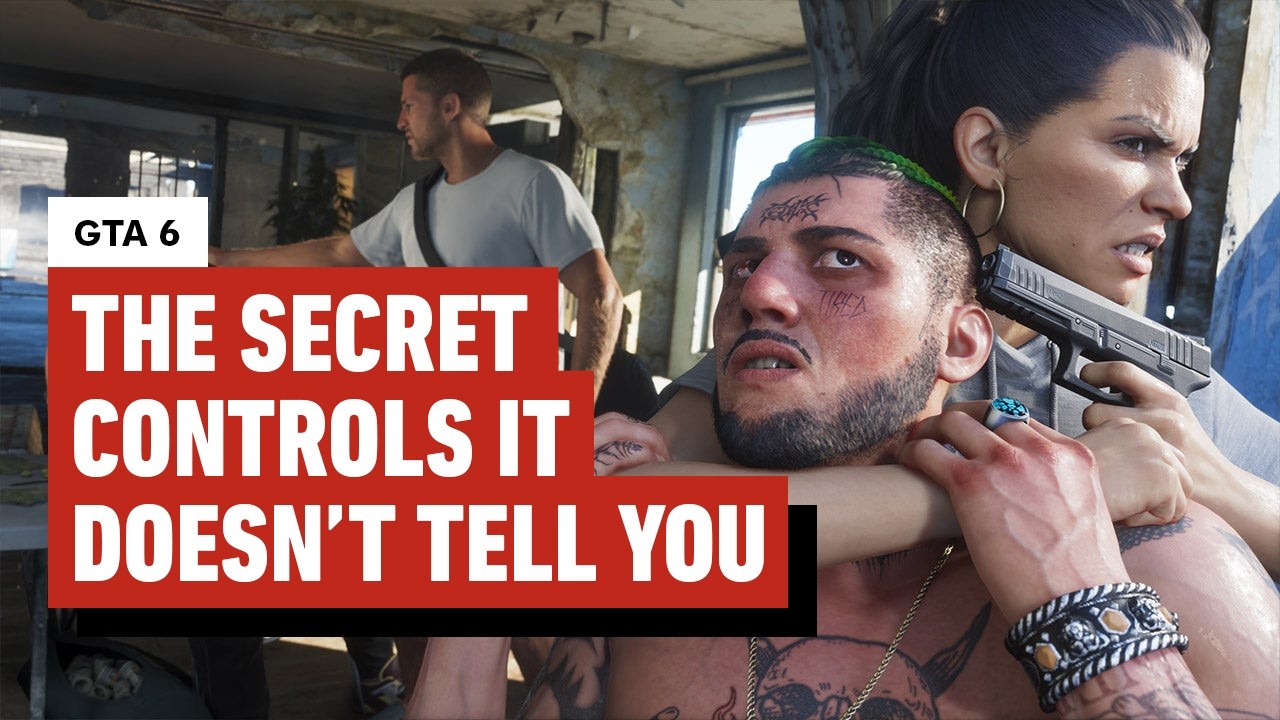
GTA 6 promises a world where even familiar actions can hide a new wrinkle. The game’s opening menu makes one change clear before players reach Leonida: sprinting is mapped to L3 by default. But that’s only the beginning. Across the story, useful controls emerge gradually, while others are left for players to discover—an approach that makes the game’s open-world action feel less like a checklist and more like a place to learn by doing.
GTA 6 Keeps Some Useful Moves Under Wraps
Among the 22 lesser-known controls highlighted in the guide are two that sound tailor-made for moments when a plan starts to unravel. If a car flips onto its roof, a specific input can help turn it back over. And when approaching a robbery target, players can keep the engine running outside instead of shutting down the getaway vehicle. Neither trick changes the basic rhythm of a heist, but both can make the difference between a clean exit and a frantic scramble.
That small attention to practical details fits the series’ long-running fascination with criminal logistics. Rockstar has always built its open worlds around the gap between what a player intends to do and what the city allows to happen. In Rockstar’s games, a getaway car is never just transportation; it is part of the scene, ready to become an escape plan, an obstacle, or an overturned problem in need of a quick fix.
GTA 6 Rewards Players Who Pay Attention
The contrast between an announced control and a hidden one is especially telling. Moving sprint to L3 is presented upfront, giving players a clear adjustment before the adventure begins. Other actions arrive later in the story or are never spelled out directly, encouraging experimentation in the moment. That design can make a discovery feel personal: a player who learns how to recover a flipped car through curiosity has earned a little mastery over the chaos.
It’s a smart evolution of the genre’s familiar control language. Compared with the more overtly instructional feel of some modern open-world adventures, GTA 6’s quieter hints suggest a willingness to let players connect the dots themselves. The approach also recalls the pleasures of older classic games, where tucked-away mechanics and hard-won knowledge often became part of the community conversation. For more coverage across the medium, the general gaming hub tracks the wider stories shaping play.
Small Controls Can Change the Shape of a Getaway
These 22 secret buttons matter because they turn routine movement into meaningful decisions. A sprint input changes how quickly a character responds; a vehicle recovery move can rescue a run that looked finished; leaving the engine on can preserve precious seconds when a robbery turns into a chase. The controls may be small, but they deepen the sense that success depends on knowing the world as well as reacting to it. For players exploring Leonida, the most useful lesson may be simple: not every important instruction arrives on a menu screen.
For a series built on freedom, that balance between guidance and discovery feels fitting. The official GTA 6 page provides the game’s public home, while the finer details of play are left to unfold through the experience itself. Hidden controls give observant players another reason to test their instincts—and offer a reminder that in Grand Theft Auto, the escape route can begin with a button most people never thought to press.