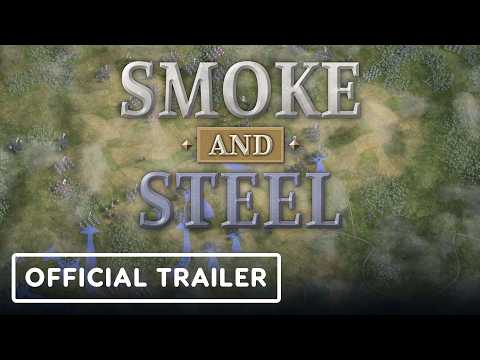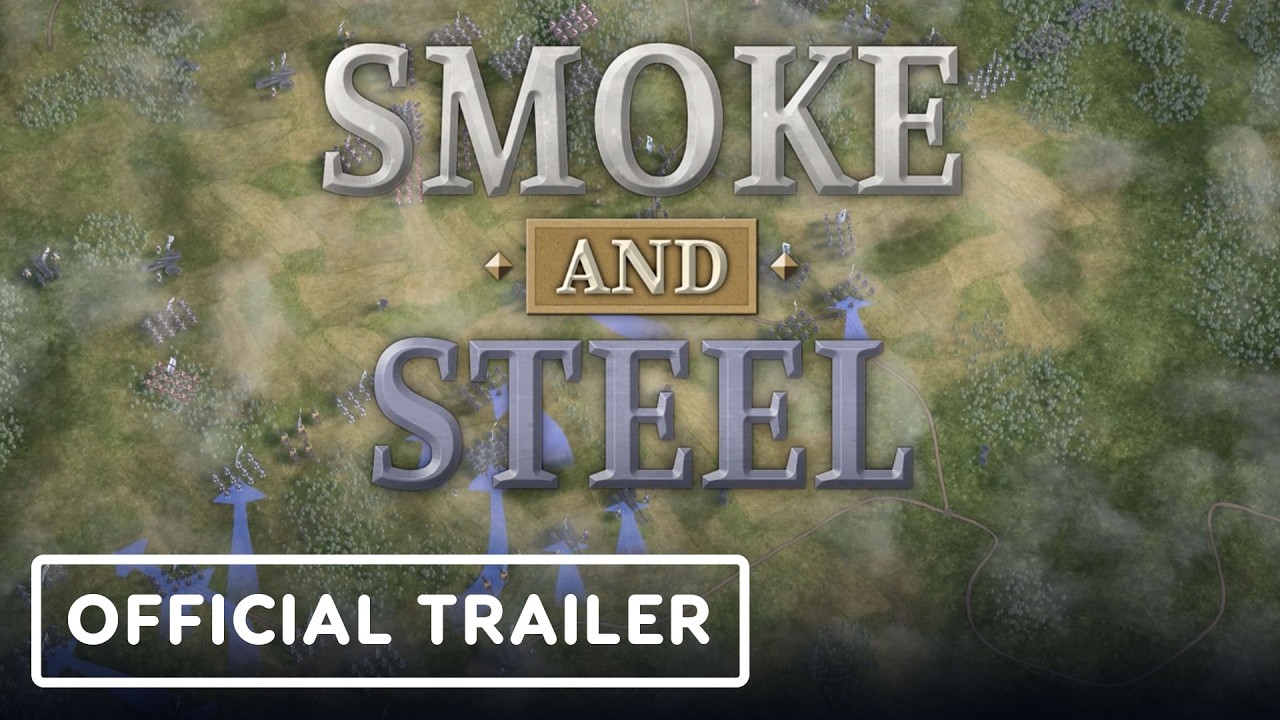
Take a look at the announcement trailer for Smoke and Steel, an 18th-century grand-strategy wargame developed by Generalship Games. Lead a nation through early 18th-century Europe in Smoke and Steel, a turn-based wargame combining grand strategy with tactical battles. Choose diplomacy or war. Build your economy, forge alliances, and negotiate trade deals, then command your armies in battle. Outthink, outflank, outlast. Smoke and Steel is coming soon to PC (Steam).
Smoke and Steel Emerges as a Grand Strategy Promise
Across the gaming landscape, a new trailer signals a refreshing blend of diplomacy and warfare set in an 18th-century European theater. Smoke and Steel invites players to steer a nation through delicate alliances, intricate economies, and tactical battles that demand a clever balance between negotiation and bravado. In the official trailer, the game’s ambition is laid bare: lead through the fog of diplomacy or press for dominance on a battlefield where every maneuver reshapes the geopolitical map, all while the clock ticks and empires hinge on every decision. For more context on how grand strategy has evolved in recent years, see Grand Strategy on Wikipedia and a critical take on contemporary wargaming at IGN.
As the trailer unfolds, the sense of scale becomes palpable. The title’s promise of a turn-based system that marries broad strategic management with tactical battlefield control signals a throwback to classic grand strategies while embracing modern design sensibilities. For gamers curious about the lineage of these systems, a deeper dive into historical grand strategy can be found on Wikipedia, and a production perspective on how developers approach period settings is discussed at IMDb.
Diplomacy and War as Dual Lenses for Empire Building
The essence of Smoke and Steel rests in its dual-path design: diplomacy or war. The trailer hints at an engine that rewards patient alliance-building, clever trade deals, and economic stewardship, alongside the nerve of real-time battlefield commands when wars erupt. This duality mirrors a growing trend in strategy gaming where narrative and systems intersect to reward long-term planning as much as decisive action. Readers curious about how diplomacy has shaped real-world history can explore diplomacy in history and then compare with contemporary analyses on Britannica.
From a design perspective, the balance between economy management and military campaigns is a tantalizing challenge. The trailer’s emphasis on forging alliances, negotiating trade terms, and building a robust economy suggests a game that rewards soft power just as much as hard power. For broader context on how strategy games represent economic systems, see PC Gamer’s take on strategy design and a historical lens at National Geographic’s view on 18th-century economies.
Turn-Based Precision Meets Live-Action Strategy
The prospect of a turn-based grand strategy interwoven with tactical battles positions Smoke and Steel as a thoughtful evolution of the genre. The pacing promises a cerebral experience where every decision has cascading effects, from tax policies to military deployment. Those who crave a rich, immersive campaign will find the regional theaters and political rivalries richly textured in the trailer, which aligns with industry discussions about the importance of narrative depth in strategy games. For further reading on turn-based design philosophies, see Turn-based video game design and a provocative piece on modern strategy at IGN’s coverage.
PC players will likely scan for platform details and release expectations, with Steam often serving as the launchpad for such titles. A comparison of distribution models and launch strategies can be explored through Steam’s catalog and a broader look at digital distribution on Wikipedia.
Crafting an Immersive 18th Century Battlefield Experience
The setting promises a richly textured backdrop for strategy and warfare. From naval skirmishes to land campaigns across sprawling European theaters, the game’s design appears to emphasize authenticity without sacrificing accessibility. The trailer’s aesthetic cues—period-accurate uniforms, weaponry, and strategic maps—signal a dedication to atmosphere that resonates with fans of historically grounded games. For readers interested in historical accuracy in games, explore History.com and a critical look at how games handle history on Rolling Stone.
As a piece of media, the announcement trailer functions not just as a teaser but as a blueprint for a broader universe. The blend of economic management, diplomacy, and battlefield command invites players to script their own imperial sagas, inviting comparisons to classic titles and contemporary indies alike. For further exploration of how game trailers build worldbuilding, see IMDb trailers as study and a strategic analysis at British Film Institute.
Public Anticipation and the Road Ahead for Smoke and Steel
With a title like Smoke and Steel, anticipation centers on how deeply a game can simulate the balancing act of medieval-modern statesmanship. Steam presence hints at a ready audience eager to test diplomacy, economy, and warfare in one cohesive package. The trailer’s cadence suggests a development team that values player choice, tactical depth, and narrative momentum—an inviting mix for both veterans of the genre and curious newcomers. For broader context on how Steam shapes strategy titles, check out Steam store’s strategic titles and a retrospective on platform ecosystems at Wikipedia.
Ultimately, this official trailer sets the stage for a grand, cinematic approach to 18th-century grand strategy. It whispers of complex political games, economic calculus, and battle-tested tactics, all twined into a single immersive experience. For enthusiasts seeking broader context on how strategy games shape and reflect history, consider Britannica’s history of technology and a companion critique on game design at The Verge.