
Seller: the-tinker-shoppe (99.9% positive feedback)
Location: US
Condition: Used
Price: 74.95 USD
Shipping cost: Free
Buy It Now
#Sponsored

Compare Live Prices
Lore & Research Data
Partner Deals & Off-Topic
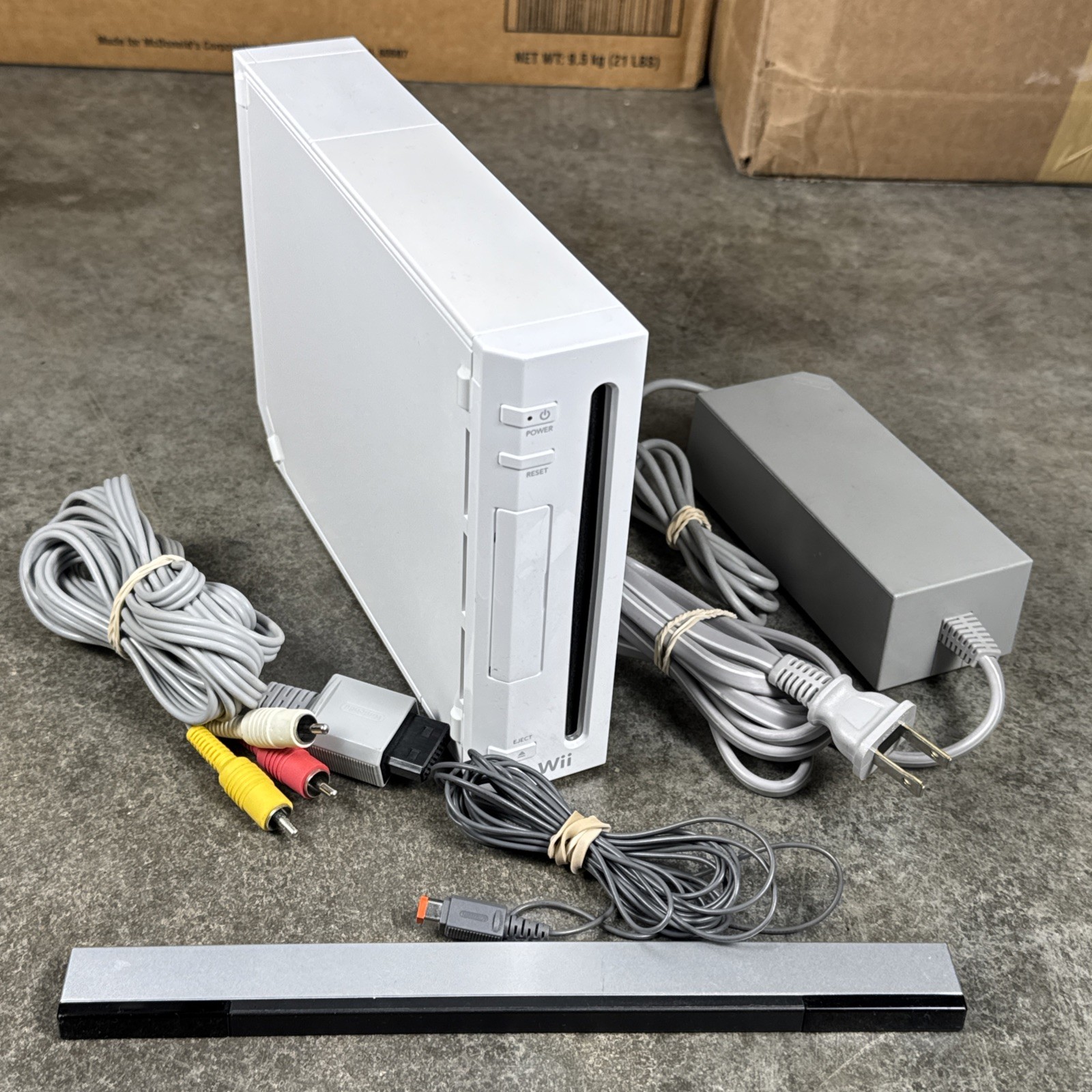
The Nintendo Wii, introduced as a versatile living-room hub for gaming and entertainment, built a lasting reputation on its backwards compatibility with GameCube software. The RVL-001 model, commonly referred to as the original Wii, includes hardware capable of running GameCube titles and supporting a range of accessories. This article examines the RVL-001’s backwards compatibility, with a focus on OEM cables and tested configurations that ensure reliable performance for enthusiasts and collectors alike.
Understanding the hardware baseline – The RVL-001 console integrates a GameCube-compatible motherboard, enabling most GameCube games to boot from an original disc. This backward compatibility also extends to supported controllers, memory cards, and expansion options typical of GameCube hardware. – It is important to note that not every peripheral designed for the GameCube family is guaranteed to function identically on the Wii. Nintendo provided official guidance on which accessories maintain compatibility, and users should reference the console’s manual for specific compatibility notes.
Cable and accessory considerations – Power and AV cables: Original equipment manufacturer (OEM) power supplies and AV cables are recommended when assessing stability and audiovisual fidelity. While third-party cables may work, OEM cables typically offer the most consistent signal integrity across a variety of display setups. – Controller compatibility: The Wii can support GameCube controllers via the GameCube controller ports on the front of the unit. When testing, verify that both the controller and the corresponding memory card (if saving progress outside of the virtual console environment) respond promptly to inputs and data reads. – Memory cards: Genuine GameCube memory cards remain the most reliable method for saving progress in compatible titles. Some users have reported intermittent save issues when using non-original memory cards or certain adapters, underscoring the value of testing with OEM components.
Testing methodology for OEM cables and GameCube titles – Console setup: Ensure the RVL-001 unit is connected to a known-good display using the original power adapter and AV cables. Perform a cold boot to confirm the system recognizes GameCube discs or GameCube-compatible software installed on the console. – Disc-based games: Test a representative library of GameCube discs, including a mix of popular titles and lesser-known releases. Pay attention to load times, logo sequences, and in-game responsiveness. Note any disc read errors or graphical anomalies, which may indicate a dirty lens or a failing drive/connection. – Controller and memory card tests: Using authentic GameCube controllers, perform input-driven tasks such as menu navigation, character control, and in-game actions. Confirm that save data writes correctly to memory cards and that data retrieval functions as expected across session restarts. – Cable integrity: Swap to known-good OEM cables if any signal degradation is observed. Assess color accuracy, audio synchronization, and stability across different display modes (SD, progressive scan if supported, etc.).
Observed performance and considerations for collectors – Game compatibility: A large majority of GameCube discs function reliably on the RVL-001; however, regional variations and disc quality can influence performance. If a particular title fails to boot, verify disc cleanliness, region compatibility, and drive condition before resorting to alternative solutions. – Audio-visual fidelity: When using OEM cables, many users report stable composite or component video output with faithful color reproduction. Any deviations in hue or signal dropouts are typically attributable to cable wear, connector oxidation, or display chain issues rather than the console itself. – Longevity and maintenance: Regular cleaning of disc drives and connectors, along with careful handling of memory cards, can extend the lifespan of the hardware. For preservation enthusiasts, documenting firmware revisions, serial numbers, and component variants aids in long-term compatibility tracking.
Practical guidance for enthusiasts – Verify accessory authenticity: Where possible, source OEM or officially licensed GameCube accessories to minimize compatibility risk. This is particularly important for memory cards and controllers that influence save functionality. – Document test results: Maintain a log of titles tested, disc condition, cable models, and observed behavior. Such records assist in diagnosing intermittent issues and guide future hardware acquisitions. – Consider service options: If systemic compatibility problems arise, professional inspection may be warranted. Replacement peripherals or a controlled restoration approach can restore reliable operation without compromising the console’s integrity.
Conclusion The RVL-001 Wii model remains a cornerstone for fans who value GameCube backwards compatibility. By employing OEM cables and thoroughly testing a representative game library, collectors and players can experience a broad spectrum of classic titles with a level of reliability that reflects Nintendo’s original design intent. thoughtful maintenance, careful accessory selection, and meticulous testing procedures collectively empower a satisfying and enduring retro-gaming experience.