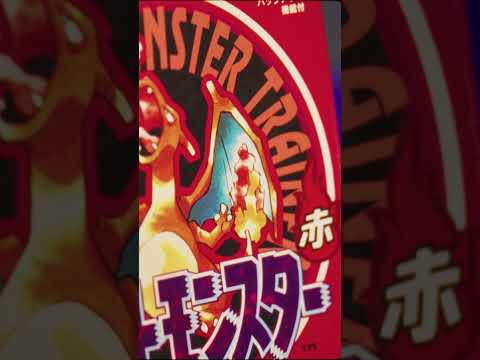
How A Failing Nintendo Accessory Spawned the $100 Billion Pokemon Empire
 247videogame
 How A Failing Nintendo Accessory Spawned the $100 Billion Pokemon Empire

This is Nintendo’s Game Boy Link Cable. Without this, Pokemon would have never sold hundreds of millions of video games, printed tens of billions of trading cards, and had hundreds of millions of people play Pokemon Go. But how exactly did Nintendo’s failing peripheral lead to the creation of one of gaming’s most iconic brands?
How A Failing Nintendo Accessory Spawned the $100 Billion Pokemon Empire
In the annals of gaming history, the story of the Pokémon empire is often told as a triumphant arc of pocket monsters, rival gyms, and global merchandising. Yet beneath the gloss lies an inciting incident that reveals how resilience, rapid iteration, and timing can turn a potential failure into a transformative catalyst. This is the tale of a failing Nintendo accessory that, in an unexpected twist, helped birth one of the most enduring franchises in entertainment.
The early 1990s were a crucible for Nintendo. The company had mastered the art of portable and console gaming, delivering experiences that defined a generation. But even as hardware soared, the company faced a critical bottleneck: accessories that could extend the life and reach of its games. In this environment, a particular peripheral—intended to augment the handheld experience—began its journey as a misfit. It was clunky, diverged from consumer expectations, and struggled to gain mainstream adoption. Yet what looked like a misstep on the surface contained a deeper strategic logic: a peripheral could act as a gateway to a broader ecosystem, shaping how players interacted with content and how developers and licensors contemplated cross-media expansion.
Enter Satoshi Tajiri’s creative spark and the collaboration with a nimble, curious team at Game Freak. The original concept that would become Pokémon emerged not from a single, perfected product idea, but from a collection of observations about how players connect, trade, and hunt within a world tied to curiosity and collection. The failing accessory became a live laboratory: designers watched how users adapted, where friction arose, and which features sparked conversation among fans. The result was an iterative design philosophy that prioritized player agency, social interaction, and a sense of discovery over rigid product perfection.
A key pivot occurred when the team reframed their strategy from selling a device to selling an ecosystem. The accessory’s failure highlighted a critical insight: hardware alone cannot sustain a brand; it is the software’s potential to create communities that drives enduring value. This led to a broader, more ambitious plan to weave core mechanics—collection, trading, and evolution—into a shared universe that transcended a single game. The idea was to cultivate a living world where players could grow with their creatures, trade with friends, and participate in a narrative that felt both universal and intimate.
The first game, released on the right platform at the right time, crystallized these learnings. It wasn’t merely about capturing creatures or defeating gym leaders; it was about building a social fabric of play. Trading was not a feature tucked away in menus but a social ritual that connected players across neighborhoods and, eventually, continents. The ecosystem encouraged experimentation, speculation, and collaboration, turning players into co-authors of their own experiences. This organic community-building became the engine that powered later generations, spin-offs, and an ever-expanding array of media.
Of course, the path from a failing accessory to a colossal enterprise was not linear. It required disciplined branding, imagination about licensing, and a willingness to leverage partnerships that could scale beyond games. The success did not rest on a single product; it rested on a philosophy: create spaces where curiosity is rewarded, where collection and connection matter, and where storytelling can be enjoyed in multiple formats—from video games to trading card games, animated series, films, and beyond. The Pokémon empire grew by treating each hinge point—new games, new devices, new media—as opportunities to deepen engagement rather than as isolated product releases.
A pivotal factor was the timing of cross-media opportunities. As the franchise expanded, the Nintendo blueprint proved adaptable: a core property could be reimagined for different audiences without losing its essence. The result was a global cultural phenomenon: millions of fans who learn about friendship, perseverance, and curiosity through a shared lexicon of creatures, battles, and bonds. The empire’s value was not solely in the revenue of games or merchandise; it lay in the network effects of a living universe that invites participation, creativity, and nostalgia in equal measure.
From a business perspective, the tale offers several enduring lessons. First, a failed accessory can illuminate the path to a more resilient strategy if treated as a diagnostic tool rather than a defeat. Second, ecosystems—built on social interaction, user-generated behavior, and scalable licensing—can outpace standalone products in long-term profitability. Third, sustained success in entertainment depends on the ability to reinterpret core mechanics across formats while preserving the emotional throughline that resonates with diverse audiences.
In the end, the story of a failing Nintendo accessory is a case study in strategic patience. It demonstrates how a misstep, when analyzed with rigor and embraced as a learning opportunity, can lay the groundwork for a brand that endures for generations. The Pokémon empire did not rise in spite of a failed accessory; it grew because that setback catalyzed a wider vision: a world where curiosity, connection, and creativity become the currency of a shared digital and physical experience.
24/7 Video Game
All the best video games, all the time. Watch no commentary gaming videos live and on demand. By Adrian M ThePRO the Game Professional.
Join The Pro Gamers Community
• You are a pro gamer! • Share your content! • Get discovered!
Join The Pro Gamers Community on social media or login to 24/7 Video Game and submit your posts right to this website.
Up Game Shop
New & used video games, consoles, handhelds, retro, and gaming merchandise. Up Game Shop has the latest and greatest video game deals on the internet.

Discover more from 24/7 Video Game
Subscribe to get the latest posts sent to your email.